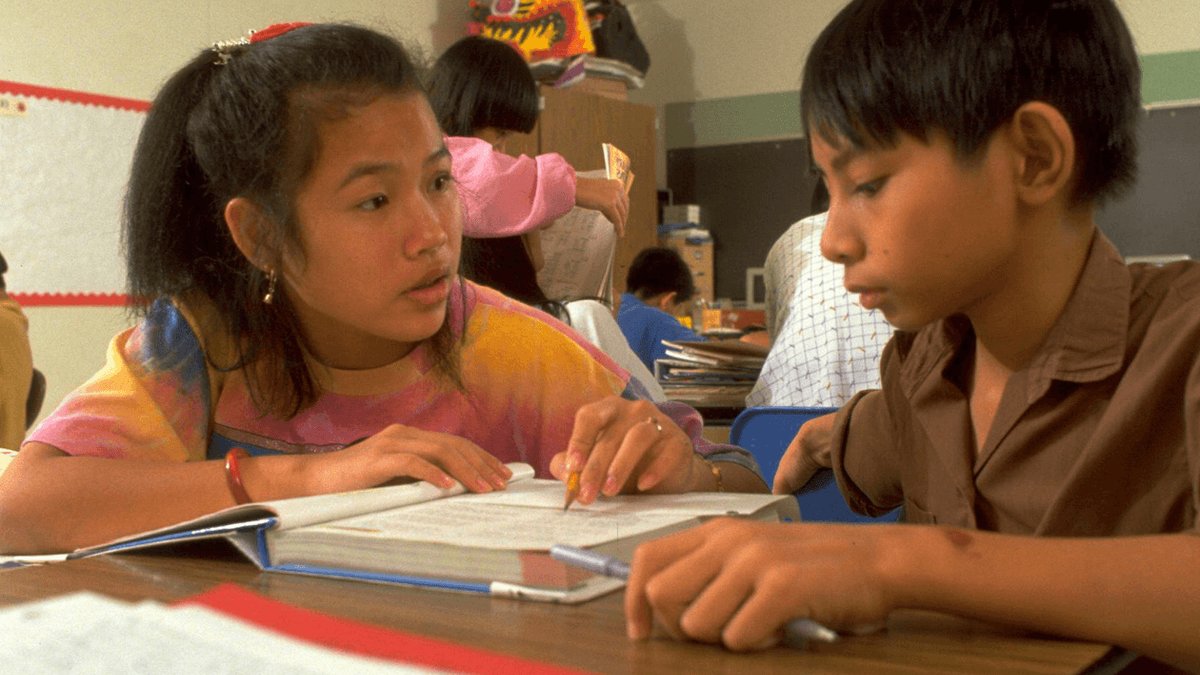
Sophie Nguyen and Minh Nguyen arrived at Harvard College as freshmen with similar experiences to many of their classmates: packed schedules, hard work, and quiet exhaustion. Yet, their path reflects a specific community narrative: as children of first-generation Vietnamese immigrants, they grew up in an environment where education was seen as the key to success in America. In a single generation, Vietnamese Americans achieved one of the most remarkable leaps in educational attainment among immigrant groups in the U.S., largely through public schools.
From Refugee Arrival to Academic Pursuits
After the fall of South Vietnam in 1975, about 125,000 Vietnamese refugees were resettled in the U.S., a significant increase from the fewer than 1,000 Vietnamese residents living there before the war. By the early 2000s, the number had grown to over 1.6 million.
Early refugees faced challenges like limited English, unfamiliarity with American institutions, and economic hardship. Many settled in working-class neighborhoods and enrolled their children in public schools. Initially, the first generation’s education levels remained low, with approximately 29% of first-generation Vietnamese immigrant adults holding a bachelor’s degree or higher.
Sophie Nguyen attributes her parents’ education levels in part to their sacrifices for their children. “I wanted to give back to them,” she said, despite their expectations for her to succeed.
Related: Children as Angels
Second Generation’s Educational Advancements
Contrastingly, the second generation’s educational attainment is much higher. Pew Research Center’s analysis shows that among Vietnamese Americans aged 25 and older, only 19% of the U.S.-born have a high school education or less, compared to 51% of the foreign-born. Over half of U.S.-born Vietnamese adults have attended college, with 55% holding at least a bachelor’s degree.
Sociologists Van C. Tran, Jennifer Lee, and Tiffany J. Huang found that second-generation Vietnamese Americans are more than twice as likely to have graduated from college as the first generation, at 62.4% versus 26.0%.
Minh recalls that college was expected, even though his parents weren’t fully aware of the U.S. education system. He remembers the pressure: “My parents made me do five hours of SAT prep daily in middle school.”
What made the difference for families with few resources and little familiarity with American schools was a combination of cultural expectations, dense community networks, and consistent reliance on public institutions.
Related: School at AI Frontier Leads Tech Innovation
Public Schools as the Primary Pathway
About nine out of ten Vietnamese American adolescents attend public schools. Language programs like ESL and bilingual classes gave newcomers essential language skills. Schools like Washington High School in New Orleans became hubs for language instruction, cultural events, and student clubs.
Cost played a role in this choice. Sophie said her family chose public school due to its affordability. Minh’s family moved to Texas for farming opportunities, and the local rural public school was the natural option.
Community networks filled gaps. As described in Growing Up American, churches, temples, and neighborhood organizations created systems of support and accountability. Academic success was celebrated, while failure carried social stigma. Families shared information about school quality, tutoring options, and college admissions. Peer and community guidance helped students handle the system, reducing disadvantages from having immigrant parents unfamiliar with American education.
Implications for Schools Today
The Vietnamese American experience suggests that accessible public schools, combined with strong family expectations and community support, can produce impressive educational outcomes, rivaling or exceeding those of more resourceful groups.
Related: Education Department: 1,900 Colleges Overdue on Data Submissions
The pattern indicates the importance of college-preparatory structures within public schools—rigorous coursework, clear guidance, and effective counseling to help students turn high aspirations into concrete results.
However, research on Vietnamese American education notes that many school programs still lack meaningful cultural support or engagement with immigrant families. Expanding culturally sensitive programs and strengthening collaboration between schools and communities could help replicate these conditions elsewhere.
Minh worries about the future. He thinks community cohesion might soften, and future generations may face less pressure, as parents become more focused on children’s needs. Nevertheless, the trajectory is clear: in fifty years, a community that arrived as refugees with almost nothing used public schools to reach college campuses across the country. The systems that made this possible—accessible institutions, shared information, and relentless family expectations—remain a working model of what public education can accomplish.
