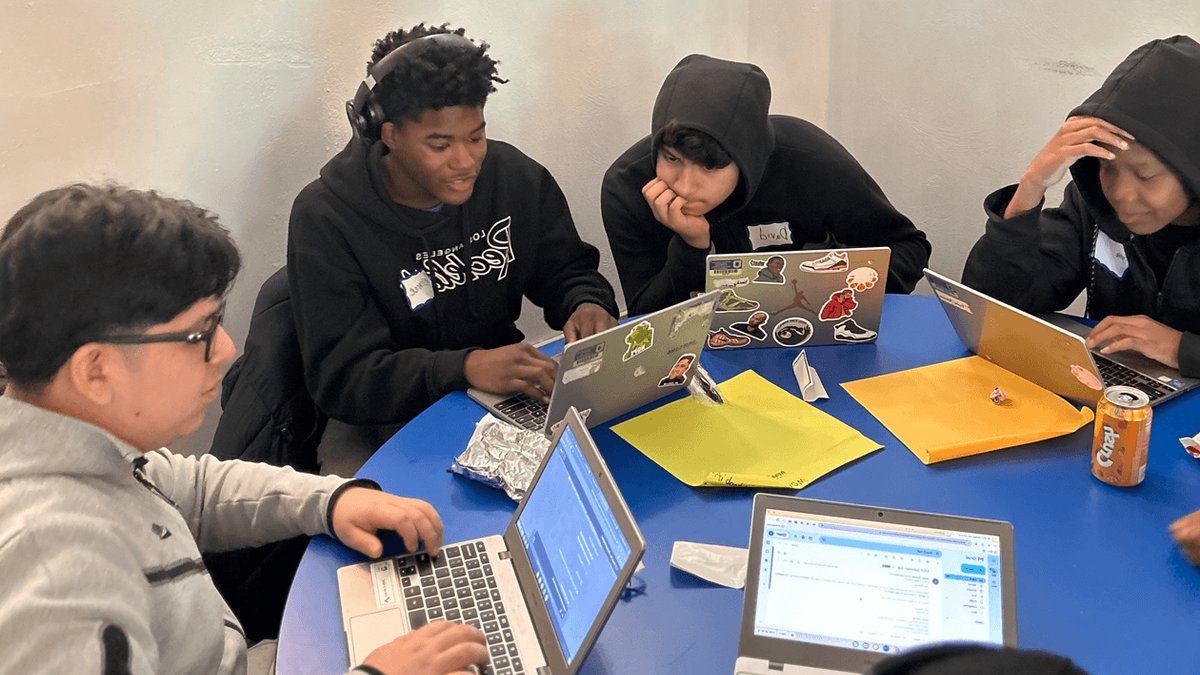
WLA teachers are integrating artificial intelligence into instruction through a variety of practical experiments, aiming to teach students both the utility and the limitations of the technology. In Giani Clarkson’s AP Government class, students faced a simulation where they had to design a country capable of resisting conquest by a fictional nation Clarkson controls. They used a chatbot to allocate their population across soldiers, scientists, artists, and educators, selecting a key natural resource before the system delivered a verdict. The bot provided the results but did not explain the causes of the victory or defeat, forcing students to analyze the outcomes themselves. Clarkson said, “It’s not good enough to just tell them, ‘This is how it happened.’ They have to see it in real time and kick the tires themselves.”
Related: Lawsuit challenges Trump student visa policy
Designing for Limits
Beyond teaching students how to use AI, the school is exposing them to its shortcomings. Niyesha Coleman, the school’s math instructional coach, built a gamified chatbot that walked students through practice problems using a voice trained to sound like hers. Students had to explain their reasoning for every answer, and sometimes the bot got the answer wrong, requiring the students to defend their thinking against the incorrect response. This exercise served as a lesson in both mathematical reasoning and the boundaries of AI capabilities. Students seem to be absorbing the distinction between helpful tools and harmful ones. A fall 2025 survey found that two-thirds of the school’s students reported learning strategies for effectively using AI tools, such as crafting prompts and evaluating output. However, 70 percent said they believed AI could be both helpful and harmful in their schoolwork.
Related: Heritage Foundation Unveils Higher Ed Reform Plan
Adam Browning, WLA’s director of academic innovation and an AP Psychology teacher, encountered a specific administrative hurdle when the College Board overhauled the AP Psychology curriculum for the 2024–25 school year, leaving teachers with few practice questions. Browning used the new technology to address this gap by creating an AI tool that generated questions modeled on the few released by the College Board. Students submitted answers to a chatbot, which gave them immediate feedback and flagged Browning if they continued to struggle. Teachers at WLA, meanwhile, are using AI to support students in ways that weren’t previously possible.
