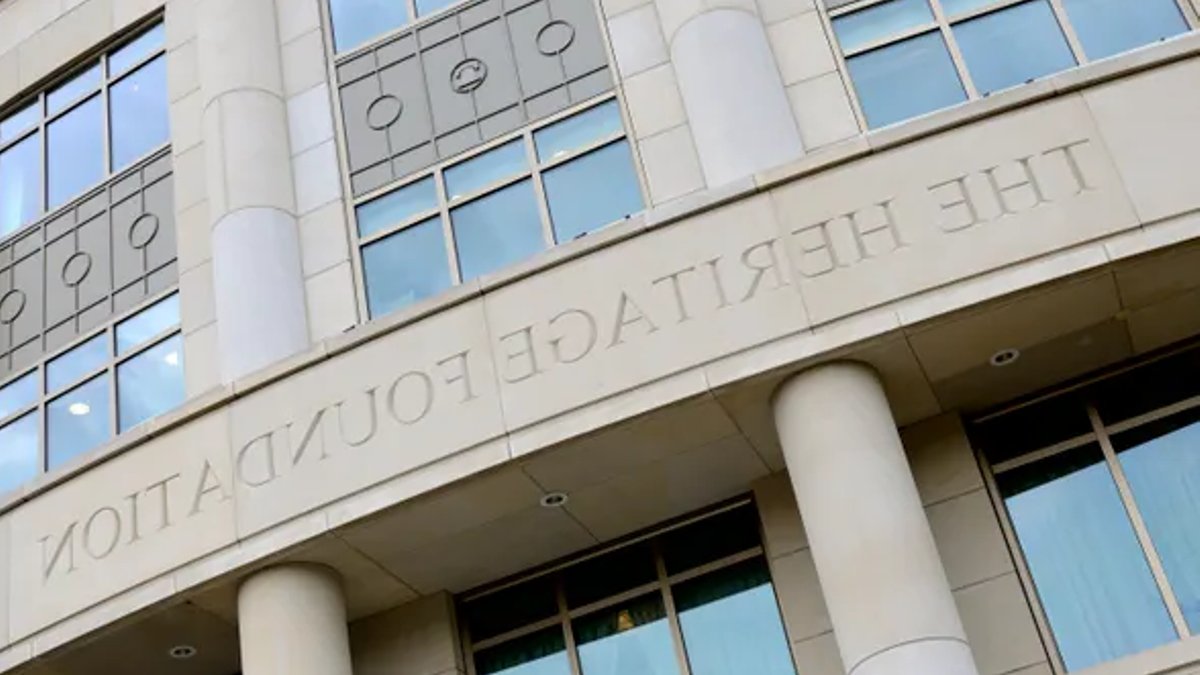
The Heritage Foundation, a conservative think tank, released a model bill to overhaul higher education, aiming to help state lawmakers codify the principles of the higher education compact proposed by the Trump administration last year. The bill seeks to require colleges to maintain institutional neutrality and ban scholarships that give advantages to applicants based on race.
The model legislation goes further than the Trump administration’s compact, restricting how institutions handle student visa issues, increasing state influence over faculty hiring, and potentially putting colleges on the hook for federal debt held by some students who don’t graduate within eight years.
A section titled “Deportable Offenses” seeks to regulate how colleges handle international students and noncitizen employees in visa disputes with the federal government. Colleges would be required to immediately suspend or terminate the individual’s enrollment or employment if notified by a federal agency that their visa had been invalidated.
Related: Alum Hospitality Concept Opens in Alabama
Conservative think tanks have significantly influenced state higher education policy through model legislation. For instance, a 2024 report from the American Association of University Professors noted that The Heritage Foundation and other think tanks have been successful in shaping higher education policy. This trend is likely to continue, with The Heritage Foundation’s model bill potentially paving the way for state lawmakers to adopt conservative policies.
The Trump administration initially offered its higher education compact to nine high-profile research universities last year, but none of them accepted it. The compact sought to have colleges cap international enrollment, freeze tuition for five years, and potentially eliminate campus units that punish and belittle conservative viewpoints.
The Heritage Foundation argued that the compact focused on principles such as merit, student learning, and free inquiry. All institutions should commit to these priorities without needing a federal compact, they said. Since so few institutions demonstrate a focus on these principles, the compact was a necessary reminder.
Related: Why L&D Can Finally Measure What Matters
Under the model bill, public colleges could risk being on the hook for some students’ debt if they fail to graduate within eight years. Colleges that accept an applicant who is unlikely to graduate on time — as determined by metrics such as their GPA and standardized test scores — would have to pay off a percentage of that student’s remaining federal student loan debt.
It remains to be seen how The Heritage Foundation’s model bill will impact the future of higher education in the United States as state lawmakers consider the proposal.
State lawmakers are considering the proposal.
