Texas community college leaders praised the state’s performance-based funding formula during a hearing, but asked lawmakers to provide enough money for it. The funding model, which ties community college funding to student outcomes, has led to financial “growing pains,” according to Ray Martinez III, CEO of the Texas Association of Community Colleges.
The Texas Higher Education Coordinating Board approved changes to formulas that could significantly reduce colleges’ performance-based funding, after the state’s community colleges achieved student outcomes that surpassed what lawmakers had budgeted.
Performance-Based Funding Model
Enacted in 2023, HB 8 tied community college funding to student outcomes, such as the completion of in-demand credentials and successful transfers to four-year colleges. Since the implementation, enrollment in Texas community colleges grew about 12% from fall 2023 to fall 2025, while student achievement has exceeded state projections nearly across the board, said Sarah Keyton, deputy commissioner for administration at the coordinating board.
Related: Bipartisan senators propose ban on legacy college admissions
For example, San Jacinto College Chancellor Brenda Hellyer said her institution’s graduating class of 7,247 last year was its largest ever, with 9,293 credentials earned, an 18% increase over the previous year.
Funding Challenges
Higher-than-expected outcomes have meant the state’s funding obligations have grown more quickly than anticipated. In response, the higher education coordinating board made changes to how the formula weighs certain outcomes, potentially shorting community colleges millions of dollars they had expected to receive in fiscal 2027.
According to the report, the coordinating board is managing a $1.2 billion appropriation cap for community colleges until the next legislative session, which begins in January.
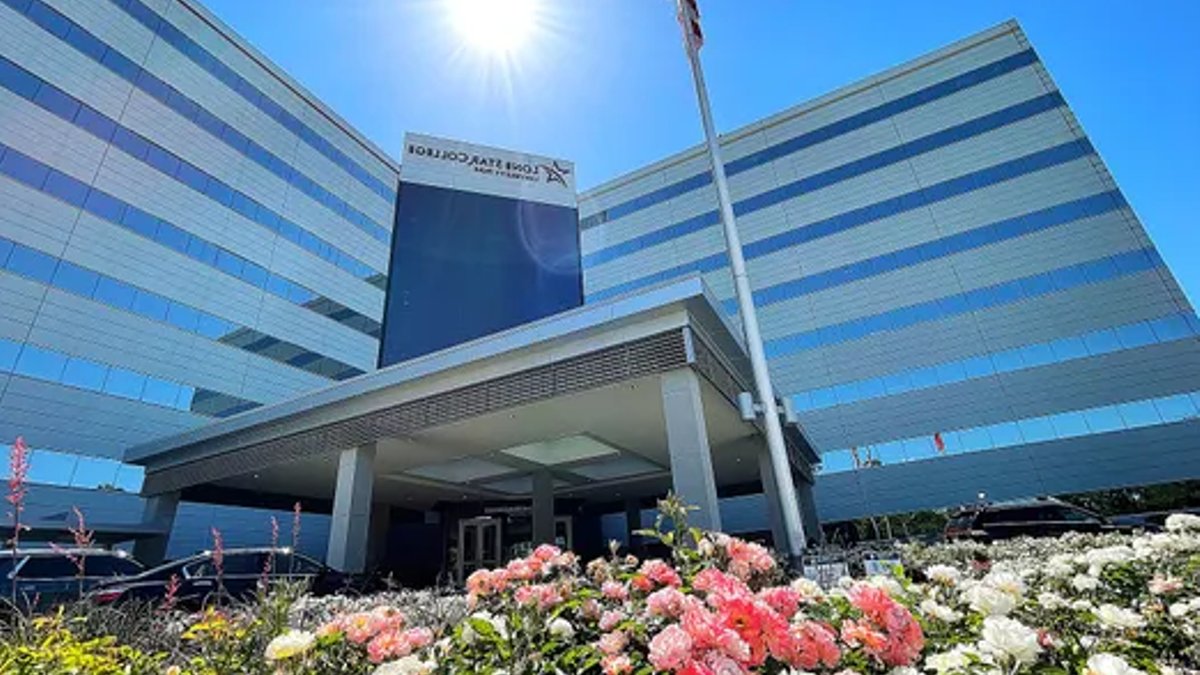
Mario Castillo, chancellor of Lone Star College System, pointed to the risks of hiring staff such as guidance counselors funded by “HB 8 money” because it can fluctuate. It could force layoffs if the money runs out.
Related: Universities unite on sustainable futures goal
Future of HB 8 Funding
Martinez told the Senate committee that his sector is asking lawmakers for “a supplemental appropriation that recognizes the outcomes our students have already earned, and a biennial appropriation that keeps pace with student success we are achieving, rather than lagging behind.”
Lawmakers during the previous two-year fiscal period passed roughly $90 million in supplemental funding to community colleges for money they were owed under the formula.
Going forward, several speakers pointed out that stabilizing HB 8 funding will require building better predictive models into the funding formulas, which could help mitigate the risks associated with uncertain funding tied to outcomes.
