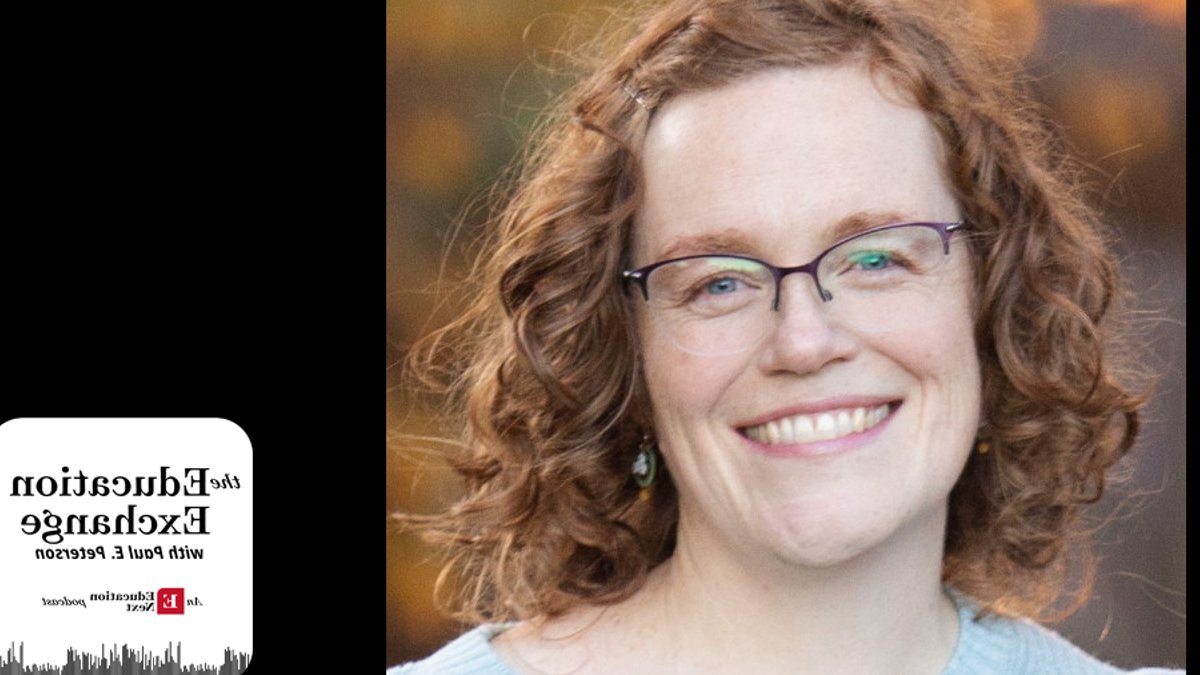
Homeschooling has doubled in size from 3 percent before the pandemic to 6 percent today, a rapid growth that has changed how people view the sector. While still a minority of the school-age population, this increase has pushed homeschooling from the margins into the mainstream of American education. Dixie Dillon Lane, the author of “Skipping School, A History of American Homeschooling and How It Went Mainstream,” joins the Education Exchange to discuss this shift.
Demographics and Daily Life
Lane describes homeschooling as a mixed bag. It offers the joy of observing a child learn to read, but it is also a demanding job that requires one parent to act as both teacher and caregiver. In her family, her husband, a history professor, helps by taking on subjects where he has a personal interest, such as handwriting. She explains that parents often step in to teach areas where they have a specific strength, such as French history or the Civil War, while relying on local resources for subjects like science.
She notes that homeschooling is no longer dominated by a single demographic group. The sector now includes families of all races, religions, and political leanings. This diversity challenges the historical stereotype of the homeschooler as an evangelical or libertarian outlier. However, Lane argues that the label “mainstream” does not mean the majority; rather, it means the practice is no longer socially unusual.
Academics and Socialization
A common concern about homeschooling is the ability to teach advanced subjects like STEM. Lane says parents often address this by outsourcing subjects they feel unqualified to teach. She uses science as an example, purchasing curricula and relying on local library clubs. She also points out that parents often focus on their own strengths while finding resources for their weaknesses.
Regarding socialization, research indicates homeschooled children frequently visit public institutions like libraries and concerts at higher rates than their peers. College admissions have also become routine for homeschoolers, who now use online programs, community college dual enrollment, and standardized tests like the SAT to present their qualifications.
A Legal History
The history of homeschooling in the United States is marked by legal battles and shifting norms. The book opens with the case of Mary Turner in the 1950s. She was prosecuted for truancy in California, where the law required children to attend school, be in a private school, or be tutored by a certified teacher. The state ruled against her despite her children following a school-like curriculum at home.
This conflict continued into the 21st century. In 2008, a California court ruled homeschooling unconstitutional after a child abuse case. The ruling sparked a massive backlash, including an amicus brief from the Los Angeles Unified School District. The state Supreme Court reversed the decision, arguing that the legislature implicitly intended homeschooling to be legal. This case highlighted the tension between parental rights and state oversight.
The American Exception
Compared to European nations like Germany and France, homeschooling is a uniquely American phenomenon. Lane attributes this to a cultural belief in local control of education and parental authority. In contrast, European nations tend to view education as a national project, often with stricter state mandates.
This cultural difference is evident in international cases. The book details a German family, the Ramikas, who fled to the United States after facing fines and threats of child removal for homeschooling. Their ongoing asylum case, which has spanned over a decade, shows the ambivalence many nations have toward the practice.
Regulation and the Public Good
As homeschooling becomes more common, states are debating the level of regulation required. Some states, like California, do not require parents to have a teaching credential to run a private school. However, other states mandate reporting and testing.
Lane suggests that the debate over regulation should consider the current state of public schools. As public literacy and numeracy scores decline, she argues it is a difficult sell to impose strict controls on homeschooling families. She favors low regulation with minimal checks to ensure children are not being neglected, viewing education as both a private and public good.
