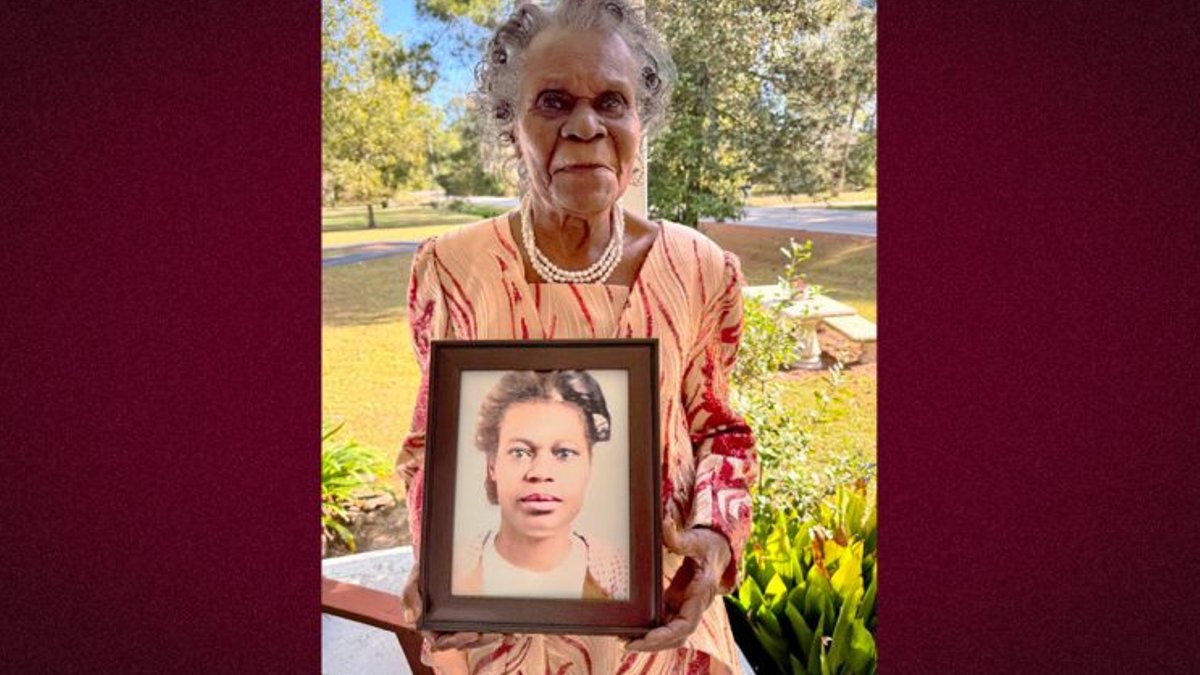
At age 27, Clara Mae Britt completed high school—a full decade older than her classmates. She had left school in eighth grade to support her family financially but returned six years later, even attending elementary-level courses again at 22 to pursue her education.
Despite facing poverty and racial discrimination, Clara Mae Britt persevered in her dream of becoming a teacher, joining the inaugural 12th-grade class at the Rosenwald School in St. George.
Rosenwald School’s History
The existing wood-frame structure, built from 1925 to 1926, was constructed through the Rosenwald Schools fund, a matching grant program established by wealthy philanthropist Julius Rosenwald in the early 20th century.
Rosenwald, the president of Sears Roebuck and Co., partnered with Booker T. Washington, a former slave turned president of Tuskegee Institute (now Tuskegee University), to establish the program. By 1932, when Rosenwald passed away, over 5,000 schools had been built across the South.
Located in rural Dorchester County, the school opened in October 1926 as one of nearly 500 Rosenwald schools in South Carolina. It closed five years after Britt’s graduation.
Celebrating the Centennial
On Saturday morning, nearly eight decades since Britt graduated in 1949, she returned to the formerly segregated school for Black children. Dressed in a matching sequined top and skirt, she was given a seat of honor on the school’s front porch, looking over a hundred people who came to mark the school’s centennial on the sunny fall day.
“I was glad that I could be there,” Britt, now 105 years old, told the SC Daily Gazette, “and to know what’s going on.”
As the school’s oldest living student, Britt’s sharp memory makes her a cherished storyteller of its history. The crowd sang ‘Lift Every Voice and Sing,’ often called the Black national anthem, during the event.
Related Post: K-12 Schools Leverage Diverse Teacher Generations
The school auditorium has been turned into an event space for rent, hosting celebrations such as birthday parties and bridal showers. Three of the school’s six original classrooms have been repurposed into a satellite location of the Children’s Museum of the Lowcountry, filled with toys and books.
Born in St. George as the eighth of nine children, Britt returned to school in 1944 when her brother sent money home after joining the Navy.
“I wanted to go back,” she said. “My mom and all of them, see, they just went to third grade, and then they didn’t have no more school.”
Britt never attained her dream of becoming a school teacher, because she did not have the money to go to college. But she was happy to achieve what she considers the next best thing: being a Sunday school teacher at St. Mark Missionary Baptist Church, where she’s been a life-long member.
According to research by Dr. Valinda Littlefield, associate professor of history at the University of South Carolina, Britt is the second oldest-known student of a Rosenwald School in South Carolina.
Britt’s oldest child, Flo Sanders, said her mom emphasized the importance of education, even when the family had no idea how they’d pay to send their children to college. “She said, ‘You got to get a good education to be able to make a good living,’” the licensed professional counselor said during a visit to her mom’s house.
Altogether, Britt and her husband, Arrie Britt, an Army veteran, had five children, four of whom served in the military. Four finished college, with two getting master’s degrees and one obtaining a doctorate. The family’s emphasis on education has had a lasting impact, with Britt’s children and grandchildren achieving great things.
Two stone markers in the front yard bore the names of some of the students who attended the six-classroom school, initially called the St. George Colored School, then renamed Williams Memorial High to honor its former principal, the Rev. A.D. Williams. The markers were a poignant reminder of the school’s rich history and the many people who had passed through its doors.
