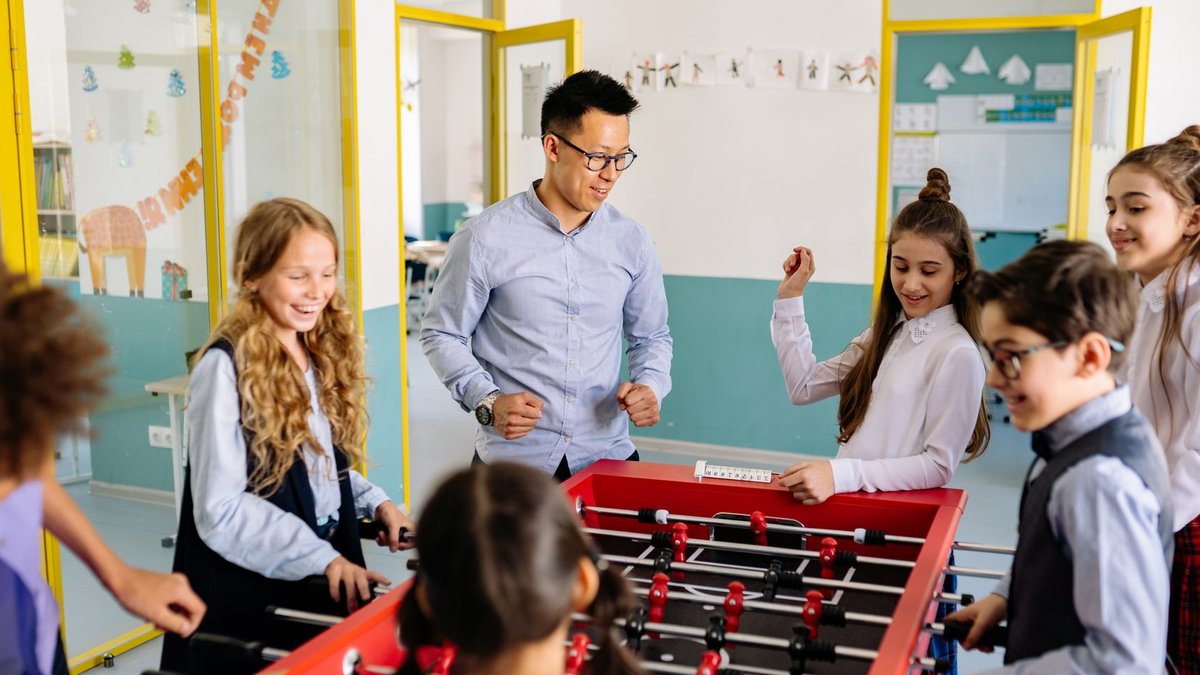
Board games entered a middle school STEM classroom this past school year, changing the atmosphere from quiet calculation to loud debate. Students gathered around tables to design games that could be built and gifted to a 5th grade math class, rather than working on standard earthquake-proof towers or robotic arms. This project required students to balance game mechanics with classroom content, a challenge for 12- to 14-year-olds competing with polished digital entertainment.
Learning through failure
The process begins with a rough prototype, often featuring unclear rules or gameplay that no one can win. This early stage forces students to think critically about systems, fairness, and user experience without relying on formal vocabulary. When the class tests the games, the feedback is immediate and unfiltered. If a mechanic is confusing or boring, students say so, which pushes them to refine their designs in a way that feels different from revising a standard assignment.
It is easy to assume that because students play games all the time, they know how to design one. They don’t. They have to think carefully about how a game starts, how it ends, what keeps it fair, and what keeps people engaged long enough to finish it. Without using the formal language, they are working through systems, balance, and user experience in a very real way.
One group built a dice tower game with laser-cut components and custom dice, while another developed task cards and a backstory for a “magical dice” system. These students learned to collaborate on physical builds, visual assets, and game balance. The project revealed strengths in students who often did not stand out during traditional lessons, showing how multiple entry points allow every participant to contribute at a high level.
Building ownership
The level of polish matters because the audience demands it. A 5th grader is more likely to play a game featuring a Viking Overlord than a set of beat-up cardboard pieces. The physical product provides a tangible experience that cannot be replicated on a screen. Students also found value in the act of giving back to their former elementary school, shifting their motivation from earning grades to creating something with real impact.
Related Post: Denver Teacher Improves Student Podcast Presentation Skills
When the final games are ready, the classroom energy shifts. Students explain their designs, watch others play, and make adjustments in real time. This level of focus and investment comes from the work itself rather than external pressure. The project reinforces specific skills and structures while still allowing students to take ownership of their learning.
Reflection on impact
A 5th grade class receives the games as gifts, which changes the dynamic from a school task to a community service. Students see the value in their work because it will be used by other children. This external validation motivates them to refine their creations beyond the basic requirements of the assignment.
Teacher recognition
The initiative gained attention within the local school district. The author of the original account received the title of District Teacher of the Year. This honor highlights the effectiveness of the approach used in the makerspace program. The focus on design, fabrication, and real-world impact serves as a model for other educators in the region.
Robert Dumas is a middle school STEM teacher in the Broken Arrow (OK) Public Schools, where he leads a makerspace program centered on design, fabrication, and real-world impact. Robert has taught math, science, and computer science across grades 5–8. He is passionate about helping students find their voice through hands-on learning, storytelling, and creative problem solving. Robert was recently named District Teacher of the Year and his students have earned state and national recognition through the Technology Student Association, including national championships in video production and multiple state titles in various STEM competitions.
