
Education Definition: Meaning, Purpose, and Importance in Modern Society
By [Expert Journalist Name] |
Unpacking the Definition of Education: More Than Just Schooling
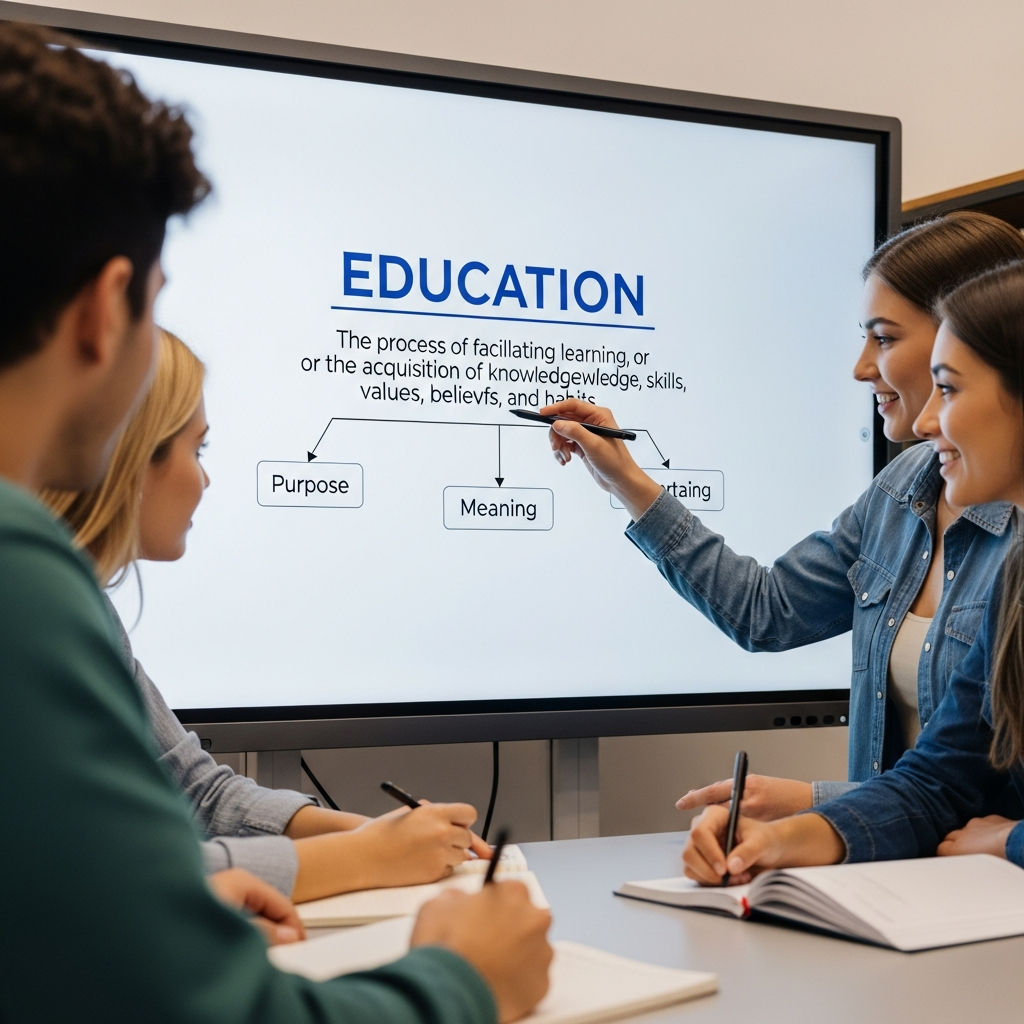
Education is one of the most fundamental pillars of human civilization, yet its definition often remains constrained by traditional views focused solely on classroom instruction. In its broadest sense, education is the process of facilitating learning, or the acquisition of knowledge, skills, values, morals, beliefs, and habits. It is a continuous, dynamic process that starts at birth and ideally continues throughout life—a concept often referred to as lifelong learning.
While formal education (schools, universities) provides structured learning environments, education also encompasses informal learning (through experience, family, and community) and non-formal education (structured learning outside a formal curriculum, like vocational training or workshops). Understanding this expansive definition is crucial for appreciating its true societal impact.
The Multifaceted Meaning of Education
The meaning of education transcends mere rote memorization or the accumulation of facts. It signifies transformation—the development of the individual’s intellectual, emotional, social, physical, and spiritual capacities. Education is the key mechanism through which culture is transmitted and improved upon across generations.

Etymological Roots and Philosophical Interpretations
The term “education” derives from the Latin words “ēducātiō” (“a breeding, a bringing up, a training”) and “ēdūcō” (“I lead forth, I draw out”). This etymology suggests that the core meaning of education is not simply pouring information into a container (the student), but rather drawing out the innate potential and abilities already present within them.
Philosophically, figures like Plato viewed education as training the mind to apprehend the good, while John Dewey emphasized education as the continuous reconstruction of experience, fundamentally linking learning to practical life and democratic citizenship.
The Fundamental Purpose of Education
The purpose of education is neither singular nor static; it evolves with societal needs but maintains several core objectives crucial for both individual flourishing and collective stability.
1. Personal Development and Self-Actualization
At the individual level, the primary purpose of education is enabling personal growth. This includes enhancing critical thinking skills, fostering creativity, developing emotional intelligence, and building a foundation for independent decision-making. Education empowers individuals to understand themselves, their place in the world, and their potential contributions.
Cultivating Critical Thinking and Problem-Solving
In the age of rapid information flow and misinformation, the ability to analyze, evaluate evidence, and construct reasoned arguments is paramount. Modern education must prioritize teaching students how to think, not what to think. This intellectual resilience is vital for navigating complex challenges, from personal finance to global crises.
2. Socialization and Cultural Transmission
Education serves as a vital agent of socialization, preparing individuals to function effectively within their society. Schools impart shared values, norms, and civic responsibilities necessary for maintaining social cohesion. They act as melting pots where individuals from diverse backgrounds learn to coexist, communicate, and collaborate.
Promoting Democratic Citizenship and Civic Engagement
A well-educated populace is the cornerstone of a functioning democracy. Education’s purpose includes instilling civic virtues, teaching the structure of government, and encouraging active participation in community life. Without informed citizens, democratic institutions erode.
3. Economic Productivity and Workforce Preparation
Economically, education is an investment in human capital. Its purpose is to equip individuals with the skills and competencies required by the labor market. In the 21st century, characterized by automation and technological disruption, this purpose shifts from preparing students for specific trades to fostering adaptability, digital literacy, and continuous skill upgrading.
The Undeniable Importance of Education in Modern Society
The importance of robust educational systems cannot be overstated. Education acts as the engine driving progress, reducing inequality, and ensuring sustainable development across the globe.
Addressing Global Challenges Through Education
Modern society faces unprecedented global challenges, including climate change, pandemics, and economic volatility. Education is the foundational tool for creating informed solutions.
Education and Health Outcomes
Numerous studies confirm a strong correlation between educational attainment and improved public health. Educated individuals are more likely to adopt healthier behaviors, understand complex medical instructions, and participate in preventative care, leading to reduced mortality and improved quality of life for entire communities.
Education as an Equalizer and Catalyst for Social Mobility
Perhaps the most profound importance of education is its role in fostering social justice. Quality education provides pathways out of poverty, mitigating the effects of socio-economic disadvantages inherited at birth. It acts as an equalizer, granting access to opportunities based on merit rather than background.
Breaking Cycles of Poverty
When marginalized communities gain access to high-quality education, the economic prospects for successive generations improve dramatically. This effect is particularly pronounced in the education of women, which correlates directly with reduced family size, improved child health, and increased community investment.
Driving Innovation and Economic Growth
Societies with high levels of education are typically leaders in technological innovation and economic complexity. Universities and research institutions, as key elements of the educational landscape, are incubators for breakthrough ideas that spur economic dynamism. The ability to innovate and adapt quickly is central to modern global competitiveness.
Conclusion: Education as a Lifelong Imperative
The modern definition of education encompasses not just the acquisition of credentials but the continuous cultivation of human potential. Its purpose is to transform individuals into self-aware, socially responsible, and economically productive citizens. Its importance lies in its unparalleled power to solve complex global issues, drive economic prosperity, and foster social equity.
As the world continues its rapid transformation, the imperative shifts from merely providing access to education to ensuring its relevance and quality. Lifelong learning must become the norm, guaranteeing that individuals possess the intellectual flexibility to thrive in a perpetually changing landscape. Education is, therefore, not just preparation for life, but life itself, continuously enriching the human experience and shaping the future of modern society.