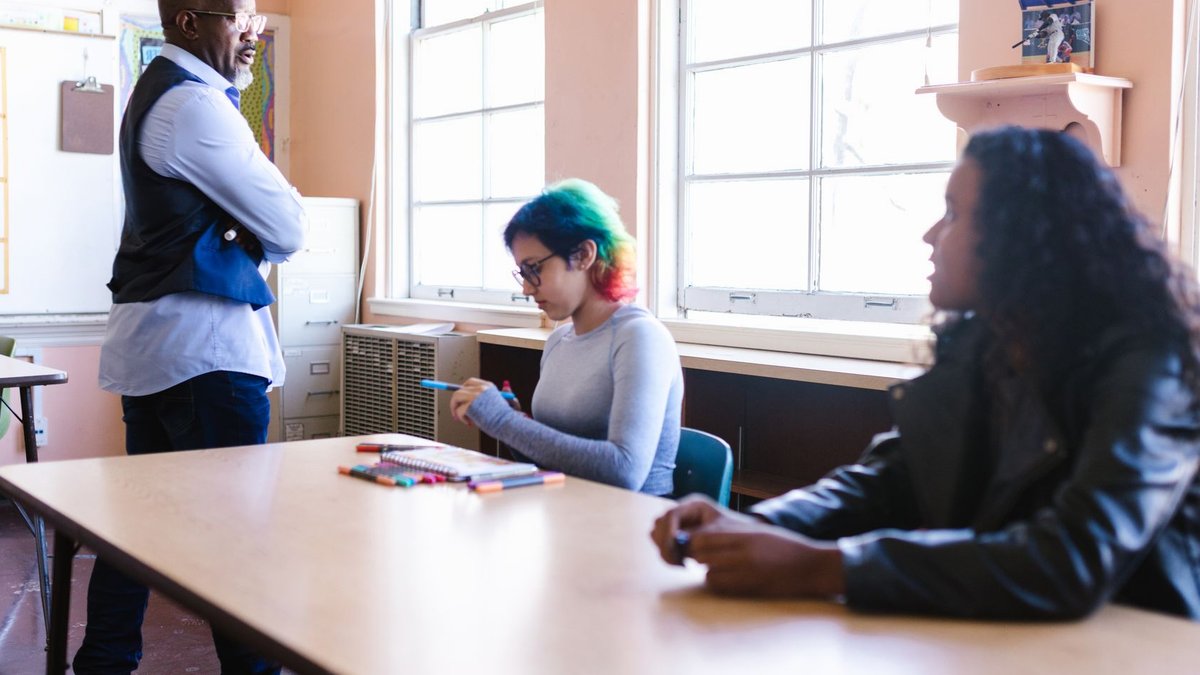
Professional development often focuses on individual growth, but a recent seminar revealed the power of collective learning. The room fell silent, and heads nodded in recognition, showing the transformative impact of this realization.
During a week-long seminar on art and literacy, teachers initially worked independently on lesson plans. However, they naturally began collaborating, sharing ideas across disciplines. This organic teamwork expanded their thinking without formal instruction. What made this moment striking was that collaboration wasn’t forced—no formal protocols or interdisciplinary mandates were in place. Teachers simply found themselves thinking alongside colleagues with different expertise, leading to richer ideas and connections.
The Power of Diverse Perspectives
At one table, an 8th-grade ELA teacher, an Academically/Intellectually Gifted (AIG) specialist, an Exceptional Children (EC) teacher, and two art teachers planned together. Their varied expertise led to richer, more innovative lesson designs. As they worked, they listened to one another’s thinking, asked questions, and considered possibilities they might not have reached alone. This diversity of perspectives became the foundation for lessons that addressed a broader range of student needs and interests.
Small Shifts, Big Impact
Creating collaborative environments doesn’t require grand initiatives. Simple changes can make a difference. For example, mixing seating arrangements can spark innovation by bringing diverse perspectives together. Teacher leaders can achieve this by ditching subject-area tables and using playing cards or colored sticky notes to randomly partner educators from different disciplines.
Another key factor is grounding collaboration in real-world tasks. When teachers work on projects that directly impact their students, the process becomes more meaningful and engaging. The teachers in the seminar weren’t discussing hypotheticals—they were designing lessons for students they knew and loved, which made their collaboration purposeful and impactful.
Curiosity Drives Innovation
Protecting time for curiosity is essential. The most valuable conversations arise from questions, not certainty. Encouraging “what if” and “how might” inquiries opens doors to new possibilities. To support this, educators can end work sessions with a 10-minute round-robin where quick answers are banned, and every contribution must start with a question like “What if…?” or “How might we…?”
For instance, asking partners to identify blind spots in their approach leads to a deeper understanding of student needs across disciplines. Before dividing tasks, teams can dedicate 5 minutes to asking each other, “What is one angle or student need on this project that I might be missing from my content area?” This simple shift prioritizes perspective over efficiency.
Practical Steps for “Me to We”
Professional learning thrives when it values both individual growth and collective insight. By creating spaces where educators can learn together, schools can unlock richer, more sustainable development. The seminar demonstrated that sometimes the most powerful professional learning happens when educators simply have the opportunity to think alongside people who see the world differently. The teachers in the seminar didn’t teach me how to collaborate; they reminded me of the conditions that make collaboration meaningful.
